Standard, Modified or Custom? Choosing the Right Power Solution
Selecting a power solution is rarely as straightforward as matching voltage, current, and wattage requirements. Every application presents its own set of challenges. Mechanical constraints, environmental conditions, compliance requirements, lifecycle expectations, serviceability, and system integration considerations can all influence the final design decision.
Engineering teams face a fundamental architecture question early in the design cycle: Should you select an off-the-shelf standard power supply, adapt an existing platform via a modified-standard approach, or invest in a fully custom power solution? The challenge is not whether one approach is inherently better than another, but understanding which solution is best suited to the application’s specific operational requirements.
Executive Summary: Decision Framework
-
Standard (COTS):
Ideal when speed-to-market, zero NRE costs, and pre-certified safety compliance are top priorities, provided catalog form factors fit your mechanical envelope. -
Modified-Standard (MOTS):
Optimal when core electrical specs match an established platform, but minor adaptations are needed—such as conformal coating, non-standard connectors, ruggedized mounting, or delta-certification for niche industries. -
Fully Custom:
Best reserved for proprietary form factors, complex multi-channel power architectures, extreme environmental conditions, or high-volume runs where unit BOM optimization offsets initial development costs.
Start with the Application
Power system selection should begin with a thorough understanding of the application. Engineers are often faced with competing priorities: optimizing performance while managing cost, accelerating time-to-market while reducing development risk, and meeting technical requirements while ensuring long-term reliability.
A power solution that appears suitable from an electrical perspective may introduce challenges elsewhere in the system if factors such as mechanical integration, EMC performance, thermal management, or lifecycle support are overlooked. For this reason, successful projects often start by evaluating the broader operational requirements before selecting a specific power platform.
Comparing Power Architecture Trade-Offs
| Evaluation Parameter | Standard (COTS) | Modified-Standard (MOTS) | Fully Custom |
|---|---|---|---|
| Development Lead Time | Immediate (In Stock) | Weeks to Months | 6 to 18+ Months |
| NRE & Tooling Cost | $0 NRE | Low to Moderate | High Initial Investment |
| Design & Integration Risk | Minimal (Proven) | Low (Proven Core) | Moderate to High |
| Compliance & Certifications | Pre-certified catalog | Delta-qualification | Full baseline required |
| Form Factor Flexibility | Fixed (1U, 3×5″, DIN rail) | Moderate (Connectors/chassis) | 100% Tailored envelope |
When a Standard Solution Is the Right Choice
For many applications, standard off-the-shelf power products provide the most effective solution. Modern power supplies, converters, and power systems are available in an extensive range of commercial configurations. When system mechanics accommodate fixed envelopes—such as open-frame 3×5 modules, 1U rack mount enclosures, or DIN-rail systems—standard products deliver rapid deployment without initial engineering expense.
The advantages are clear:
- → Proven and pre-qualified designs (e.g., baseline IEC/EN/UL 62368-1 safety standards)
- → Zero Non-Recurring Engineering (NRE) costs
- → Faster time-to-market and immediate prototype availability
- → Lower initial investment for low-to-medium production volumes
- → Established field reliability performance
- → Simplified procurement and multi-vendor sourcing options
When a standard product meets both technical and operational requirements, it is often the most efficient path forward.
When Requirements Extend Beyond the Datasheet
Applications do not always fit neatly within standard product specifications. A power solution may satisfy basic electrical requirements while presenting challenges related to physical system integration, extreme environmental performance, or specialized compliance standards.
Common application-specific requirements include:
- → Application-specific pinouts, wiring harnesses, and IP-rated connectors
- → Enhanced EMC performance and low-noise filtering
- → Mechanical adaptations (custom mounting plates, low-profile heatsinks)
- → Specialized monitoring or communication protocols (PMBus, CANbus)
- → Integrated battery backup (UPS) or active OR-ing management
- → Environmental hardening (conformal coating IPC-CC-830, shock and vibration defense)
- → Industry-specific compliance (e.g., Medical IEC 60601-1, Railway EN 50155, Defense MIL-STD-461/810)
- → Long-term component availability and extended lifecycle expectations
In these situations, engineers must evaluate whether adapting an existing platform can achieve the desired outcome more effectively than developing a completely new solution from scratch.
The Middle Ground Between Standard and Custom
The power selection conversation is often framed as a rigid choice between a catalog standard product and a custom design. In reality, many successful projects leverage a modified-standard approach that falls between these two extremes.
By building on field-proven power topologies and modifying specific mechanical or electrical parameters, engineering teams retain the reliability and maturity of an established platform while fulfilling unique application needs. Crucially, modified-standard designs frequently streamline the regulatory path via delta-qualification—saving substantial time and testing expense compared to full baseline certification cycles.
The result is a balanced solution that supports critical performance objectives while keeping development timelines, project complexity, validation effort, and lifecycle risks under control.
When a Custom Solution Makes Sense
There are situations where a fully custom power supply represents the most appropriate path forward. Systems with non-standard geometric form factors, extreme thermal constraints (such as sealed, conduction-cooled enclosures), multi-rail power architectures, or strict weight constraints benefit from a purpose-built design.
While custom development requires higher initial NRE investment and longer development cycles (typically 6 to 18 months), it offers maximum optimization. For high-volume production programs, the reduced unit Bill of Materials (BOM) cost and optimized system integration quickly outweigh the upfront development investment.
Finding the Right Balance
There is no single formula for selecting the ideal power architecture. Some applications are perfectly served by off-the-shelf standard products. Others gain significant competitive and operational advantages from modified-standard adaptations or fully custom development.
The most successful outcome is achieved by balancing electrical performance, mechanical integration, regulatory compliance, long-term lifecycle support, and overall time-to-market. Ultimately, power selection is about ensuring reliable operation throughout the entire lifespan of your system.
Engineering Reliable Power.
Further Resources
Case Studies
Explore how Powerbox has helped customers address complex power challenges across healthcare, transportation, defense, and industrial applications.
Whitepapers
Dive deeper into reliability, lifecycle management, EMC performance, and power system design.
Capabilities
Learn more about Powerbox engineering, integration, testing, and manufacturing capabilities.
Discuss Your Power Requirements
Selecting the right power solution involves balancing performance, reliability, compliance, lifecycle support, and time-to-market.
Whether you’re evaluating a standard product, a modified solution, or a fully custom design, the Powerbox team can help you assess the options and identify the most appropriate approach for your application. Complete the form below and our team will be in touch.

Powering internet through underwater cables
Underwater cables for internet traffic covers long distances and repeaters amplify to keep speed, this demands highly reliable power supplies.
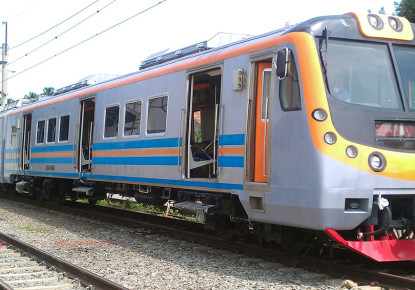
Scalable battery charging for rolling stock
A customer was updating a series of regional trains and needed battery charging and dc supply, that were to operate in a tropical climate with natural convection cooling.
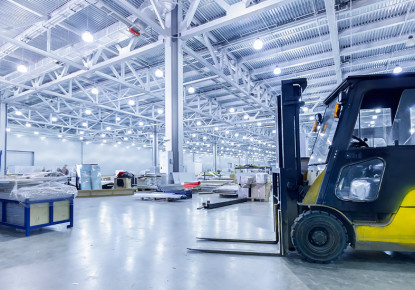
Powering a PC on any fork lift
Powering a PC from a fork lift propulsion battery involves electrical as well as physical challenges…

Re-design of propulsion system
Powerbox proposed a re-design of the customer’s subsystem, maintained schedule and avoided important potential costs for a delay.
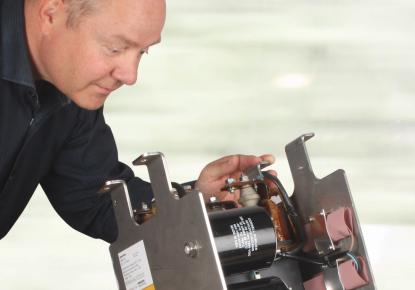
System Solution to Solve Noise and Transients Beyond EN50155/EN50121-3-2
The challenge A regular customer of ours ran into problems during a locomotive retrofit. A battery chargers input circuit broke down repeatedly and the cause was identified as a combination of noise from the load and transients from pantograph bouncing. The noise and transient levels were way outside of the limits in EN50155 and EN50121-3-2, […]
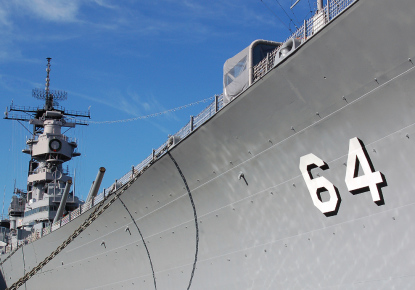
Shipboard Lighting
Shipboard lighting systems must operate reliably in electrical and environmental conditions that are far more demanding than standard commercial applications. When the US Navy moved towards solid-state LED lighting, the requirement was not only to improve efficiency and reduce maintenance. The new LED drivers also had to fit into existing shipboard fixtures, support established brightness-control […]

Converter request results in system optimization
The customer’s Challenge was to secure drivers communication for a period of six hours at flat vehicle battery conditions.
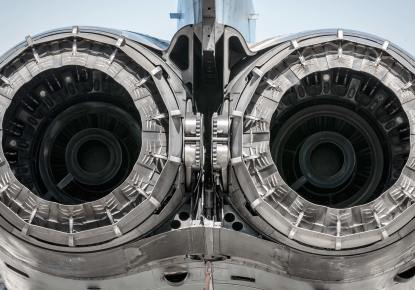
Airborne Multi Platform Mission Computer-System
The challenge was to reduce the size and weight of the power solution, since this is an airborne product and reach competitive price points as manufactured in relatively high volume for the defense market.