

From Converter Selection to Power Integration
Executive Summary
Key Engineering Takeaways
Integrating power in defense environments requires looking beyond catalog specs. Source instability, thermal baseplate limits, dynamic vehicle loads, and long-term sustainment drive the real engineering workload.
- Dynamic Input Voltage: Real 28V DC vehicle inputs experience severe dips during engine cranking, high-voltage surges, and cable transients that laboratory supplies miss.
- System-Level Integration: Thermal paths, EMC compliance under MIL-STD-461, and mechanical mounting in fanless enclosures dictate true reliability.
- COTS vs. MOTS Strategy: Modified-Off-The-Shelf (MOTS) balances rapid deployment with tailored thermal, connector, and qualification requirements.
A power supply does more than deliver voltage. In defense vehicles, surveillance equipment and field communication systems, the real challenge is often not converting power but integrating it successfully into the final equipment. Decisions made during power architecture selection can influence qualification effort, thermal performance, EMC behavior and long-term reliability throughout the life of the platform.
When Nominal Voltage is Not the Real Operating Condition
The electrical environment is rarely as clean as the first line of the specification. A 28V DC vehicle input, for example, is not just a nominal voltage. During cranking, load switching or operation on ageing batteries, the voltage seen by downstream electronics can dip, surge, recover unevenly or carry ripple and transients. Long cables, changing loads and harsh temperatures add further variation.
A communication unit that performs correctly when powered from a laboratory supply may behave differently during vehicle engine start-up, when the input voltage temporarily drops below nominal levels. Similarly, a surveillance payload that meets performance targets during bench testing may require additional filtering once installed with long cable harnesses and multiple electronic subsystems.
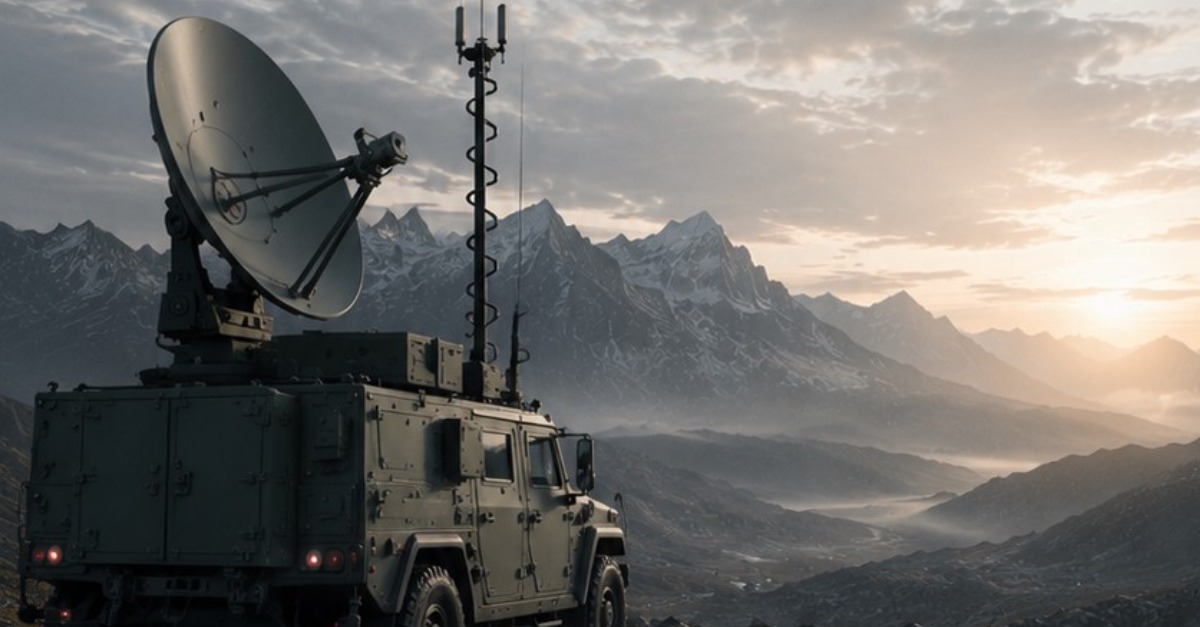
What is the primary challenge of power integration in military vehicles?
The main challenge is handling source instability on 28V DC vehicle lines. Real-world inputs experience extreme voltage dips during engine cranking, high-voltage transients, and thermal baseplate constraints that bench laboratory power supplies fail to replicate.
For a sensor payload, communication unit, display or vehicle-mounted computer, this behavior can matter as much as the rated power of the converter. A unit selected only by input range, output voltage and wattage may meet the first requirement on paper but still need further work before it fits the final equipment.
Power Integration, Not Just Converter Selection
This is where converter selection becomes power integration.
In July 2026, NATO’s Defense Industry Forum in Ankara focused on how the Alliance’s 5% defense investment plan would be turned into increased defense production, cooperation and joint procurement. The European Commission also proposed joint defense projects in areas including drones and counter-drone systems, maritime and seabed defense, space, air and missile defense and security along the EU’s Eastern Flank.
Power conversion sits inside that challenge. The converter may be one unit, but its performance is shaped by the system around it: the input source, cabling, grounding, enclosure, thermal path, load behavior and qualification requirements. These factors can influence EMC performance, temperature rise, reliability, maintainability and validation.
Standards Are the Starting Point, Not the Whole Answer
Military standards show why this cannot be treated as a single checkbox. Which standards matter depends on the platform and application. There is no single MIL-compliant answer that applies to every system.
| Defense Standard | Scope & Compliance Requirement | System Risk Prevented |
|---|---|---|
| MIL-STD-1275 | 28V DC electrical input power characteristics, surges, and transients in military vehicles. | Equipment shutdown during engine cranking and voltage spikes. |
| MIL-STD-461 | Electromagnetic interference emission and susceptibility limits. | Cross-talk, signal noise, and RF interference across sub-systems. |
| MIL-STD-810 | Environmental stress testing including shock, vibration, and thermal extremes. | Mechanical fatigue, housing seal failure, and structural degradation. |
For design engineers, the first question is not only whether a converter can deliver the required output. The better question is whether the complete power solution can tolerate the electrical and environmental conditions of the equipment and be integrated without creating new problems elsewhere.
Evaluating COTS, MOTS, and Custom Platforms
Commercial-off-the-shelf (COTS) products can be the right starting point when the application fits an existing, proven platform. They reduce development time and give the program a known technical baseline.
Defense applications, however, often move beyond catalogue conditions. A converter may need different connectors, additional filtering, a modified enclosure, adjusted monitoring, or a specific thermal interface. In these cases, a modified-off-the-shelf (MOTS) approach offers an effective balance between development speed and application optimization.
- → Utilizing modified platforms (MOTS) to balance qualification speed and custom enclosure constraints.
- → Mitigating long-term component obsolescence across 20+ year defense platform lifecycles.
- → Designing custom thermal baseplate interfaces for fanless, sealed tactical hardware.
Thermal and Mechanical Design Come Early
Thermal design is often where these realities become visible. Many defense electronics operate in sealed, fanless or compact enclosures. Airflow may be limited or unavailable. Heat then must be managed through the baseplate, enclosure and mounting surface. Baseplate temperature, thermal interface material, heat spreading, mounting pressure and derating all become part of the power design.
Mechanical design is just as important. Connectors, sealing, ingress protection, cable strain relief, mounting method and vibration resistance all affect long-term reliability. A power supply that performs well on a bench can behave differently once it is installed in a vehicle, surveillance mast, field communications unit or rugged enclosure.
Engineering Support Reduces Late-Stage Uncertainty
Early discussion between the system designer and the power specialist can reduce uncertainty. It helps clarify what can be solved with a standard product, what needs modification, and what should be engineered specifically for the application. It also helps avoid late changes, where thermal, EMC or mechanical issues become expensive to correct.
For Powerbox, this is the role of a European power conversion partner: not simply supplying a converter but helping customers move from proven defense power conversion platforms to power solutions that fit demanding defense, surveillance and communications applications.
Explore Defense Application Architectures:
System-Level Defense Power Integration & Compliance Guidelines
Platform Focus:
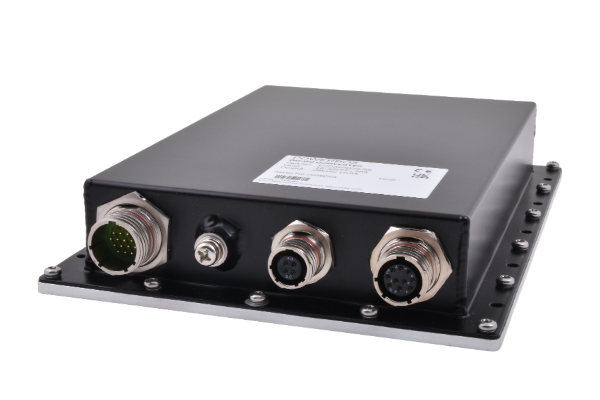
Powerbox ECDD Series Rugged DC/DC Conversion for Land & Tactical Systems
As defense programs transition toward full industrial production, engineering teams require solutions designed for demanding environmental realities. Learn how Powerbox supports custom thermal topologies and MIL-STD compliance.
View product specs & documentation:
Powerbox ECDD Series Product Portal