
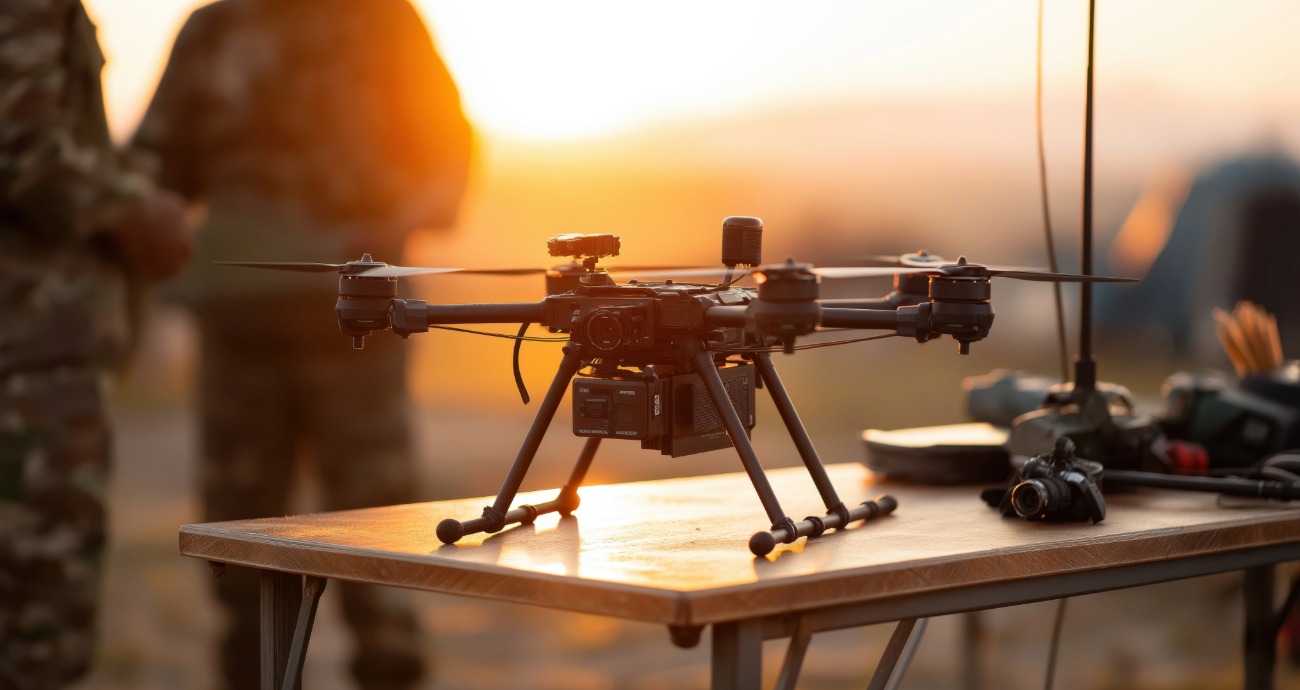
Executive Summary:
As autonomous systems move from controlled test environments to the tactical edge, the primary design constraint shifts from “intelligence” to “survivability.” High-profile sensors and AI processors often grab the headlines, but operational success is ultimately decided by the underlying power infrastructure. This article explores why the industry is moving away from traditional airflow-dependent cooling toward sealed, conduction-cooled architectures – and why the “supporting layer” of ground-based equipment is the true pillar of long-term mission reliability.
Autonomous systems whether airborne, ground‑based, or distributed are advancing rapidly. Each new generation brings more capability, more processing power and a higher degree of autonomy. But once these systems leave controlled environments and operate in the field, priorities change. Intelligence matters but reliability matters even more. And in many cases, reliability comes down to power.
The part that doesn’t move
There is a natural tendency to focus on what flies or drives. But in practice, unmanned platforms depend just as much on the equipment that stays on the ground: charging stations, control boxes, mobile support units, tethered‑drone power modules, network nodes, and processing hardware. This supporting layer determines whether deployment scales cleanly or becomes a maintenance problem. These systems are typically installed outdoors or in semi‑protected environments. They run for long periods, often unattended. They deal with heat, cold, dust, vibration, unstable inputs, and mechanical stress as part of daily operation – not as exceptions. That alone shifts the design constraints significantly.
A shift in priorities
In most areas of electronics, power supply design is still driven by efficiency, size and cost. In field-deployed autonomous systems, those priorities shift a lot. The key question becomes: Will it continue to operate when conditions aren’t ideal?
Cooling is a good example. Fan‑based cooling is common in indoor systems, but outdoors it can be a liability. Dust and moisture shorten fan life and make the entire system dependent on a moving part. That’s why conduction‑cooled platforms where heat is transferred through the baseplate have become the default in sealed enclosures and unattended systems.
In many of these cases, we often turn to conduction‑cooled AC/DC platforms such as the OFD1200A series or fully sealed mechanical assemblies such as the ECDA series, where removing airflow entirely reduces both failure points and maintenance needs.
Other installations aren’t as exposed and don’t require such heavy mechanical protection. In those environments, a simpler and more straightforward AC/DC platform, such as the OFI family, often forms the stable backbone for control units, communication equipment and small processing nodes.
Electrical conditions in the field follow the same pattern. Inputs are rarely clean or predictable. Battery packs, generator feeds, vehicle power networks and distributed sources introduce noise, dips and spikes. Designing for these inputs is less about squeezing the last percent of efficiency out of a converter and more about ensuring stable operation when the supply is anything but stable.
Mechanical stress is similar. Shock and vibration are everyday realities in mobile and field‑mounted systems. Power conversion hardware needs to handle this without increasing size or complicating integration. Individually, each of these challenges is familiar. The difference today is how consistently they appear together.
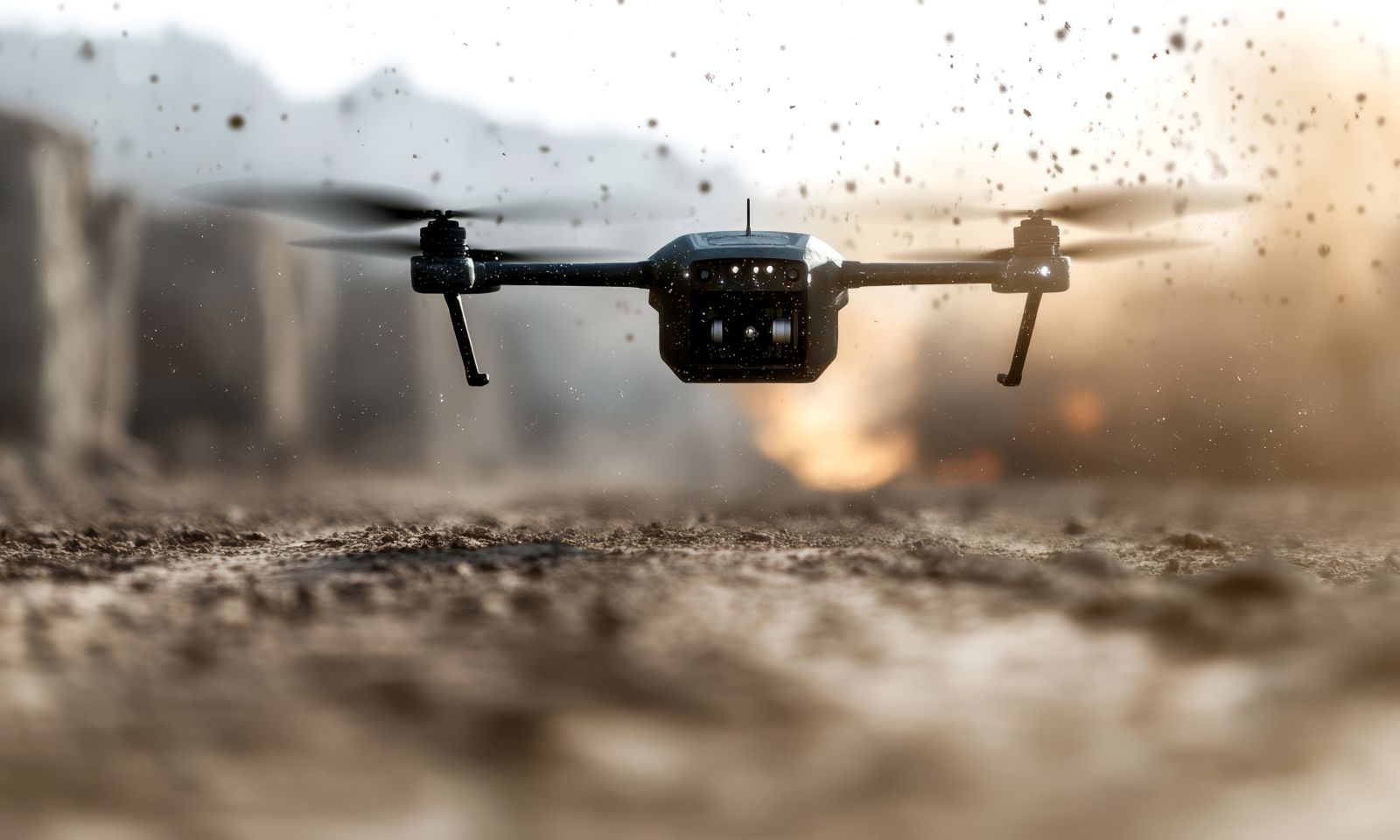
Where reliability is decided
Failures in autonomous deployments seldom originate in the high‑profile components. More often, the weak point is the infrastructure: the charger that runs outdoors, the control unit mounted on a vehicle, the tethered‑drone power module exposed to weather and load changes.
Charging stations show this clearly. On paper they seem simple: convert power, manage charging, operate continuously. In practice, they must run reliably for long periods, exposed to temperature swings and electrical noise, and depending on airflow. When they fail, the entire operation slows or stops.
Control systems and mobile support units face similar conditions. They are expected to deliver stable, clean power to radios, processors, navigation electronics and computing units while operating in environments that are anything but stable. In these cases, power design becomes a defining factor rather than a background detail.
Building on proven architectures
There is a strong push toward standardization in the industry and for good reason – cost, scalability and development speed all benefit from it. But deployments in the field expose the limits of purely off‑the‑shelf approaches. Conditions differ. Requirements shift. Edge cases become normal.
A more practical approach is to start with architectures that have already proven reliable and adapt them to the specific environment. Conduction‑cooled AC/DC designs are an example; by using the chassis for heat transfer, they eliminate fan‑related failures and keep thermal performance predictable. Sealed mechanical designs extend that reliability into harsher environments.
For onboard electronics, the situation changes again. Weight, efficiency and electrical noise dominate the design space. Navigation modules, flight controllers, sensors and communication systems all rely on clean, stable DC rails. Noise or transient behavior may not cause immediate failures, but they can reduce accuracy or degrade signal integrity over time. This is where rugged DC/DC designs are becoming more important. Our upcoming ECDD family follows the same principles as our AC/DC platforms: predictable thermal performance, tolerance for unstable inputs, and mechanical robustness but scaled to the embedded electronics.
Looking ahead
Autonomous systems are running longer in more challenging places, and with higher processing and sensing loads. This puts increasing pressure on supporting infrastructure – especially power. The general direction is clear. More conduction cooling. More sealed designs. Higher density. Cleaner electrical output. Better tolerance of unstable inputs. And a continued move toward architectures that prioritize stability over ideal‑condition optimization.
These systems are often defined by what they do: sense, process, navigate, act. But in practice, their long‑term success depends on something less visible – whether the surrounding infrastructure holds up. And within that infrastructure, power plays a quiet but central role in determining whether everything else works as intended.
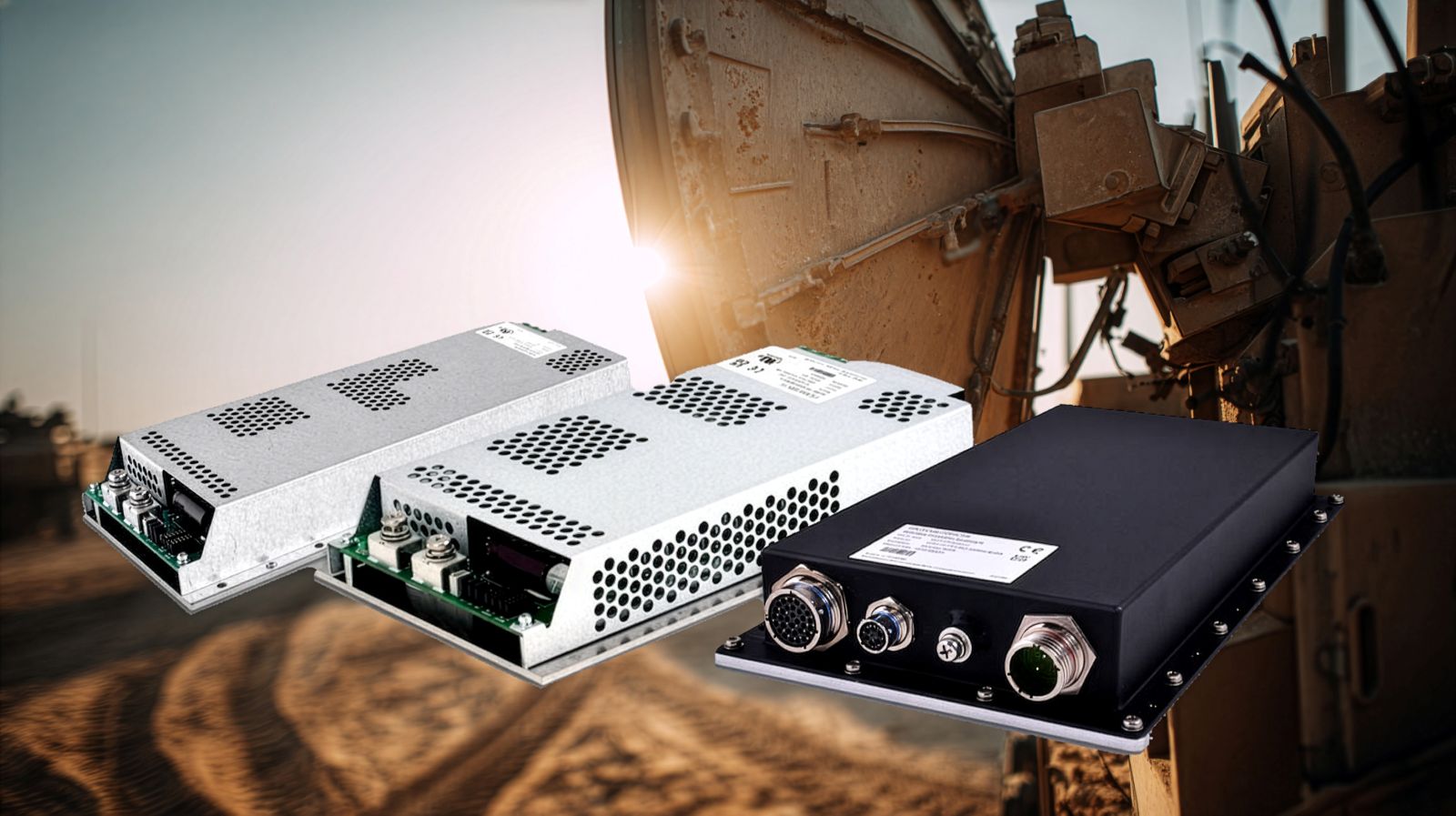
Interested in discussing power architecture for your next unmanned systems project? Contact our Power Conversion Specialists today!